AI Medical Diagnosis in 2026

Healthcare is shifting rapidly as AI Medical Diagnosis in 2026 moves from experimental trials to widespread clinical deployment. This comprehensive overview examines multimodal diagnostic models, real-world accuracy metrics, data privacy hurdles, and how doctors safely collaborate with smart algorithms.
AI Medical Scribe VS Virtual Scribe
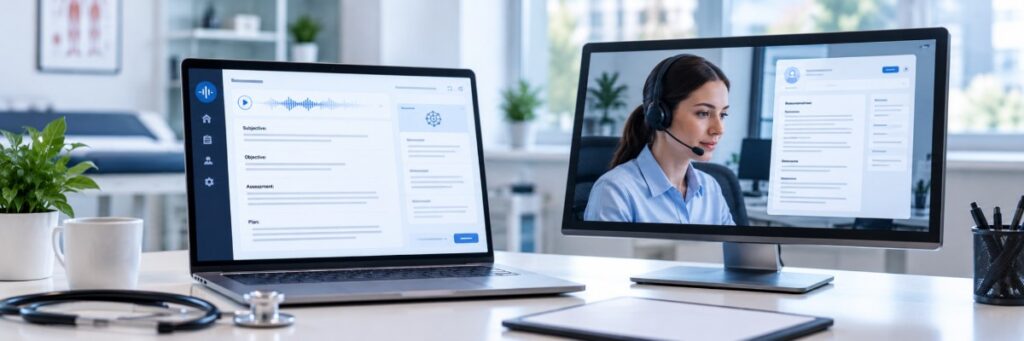
Choosing between an ai medical scribe vs virtual scribe comes down to balancing human nuance with automated speed. While remote human assistants offer context and flexibility, AI software delivers instant, cost-effective charting. Discover which solution fits your practice’s budget, privacy needs, and workflow.
AI Medical Scribe Productivity

Documentation burnout is at an all-time high for modern healthcare professionals. Fortunately, adopting an AI medical scribe productivity workflow can completely transform your daily practice. By automating clinical notes and streamlining chart management, clinics are saving hours every single day. Read the full post to learn more.
AI Medical Scribe Usability Testing

Curious about how new healthcare technology fares in real clinical environments? Dive into our comprehensive breakdown of AI medical scribe usability testing, covering key metrics, clinician feedback, and tips for evaluating software performance to enhance daily documentation workflows. Read the full post to learn more!
How to Choose the Right AI Medical Scribe for Clinic

Streamlining clinical documentation is essential for modern healthcare practices, but finding the ideal technology can feel overwhelming. Dive into our complete guide on how to choose the right AI medical scribe for clinic success, breaking down critical factors like EHR integration, data security, and ROI.
AI Medical Scribe Automation Testing

Discover the essential strategies for AI medical scribe automation testing in modern healthcare settings. As clinics increasingly adopt ambient listening tools to reduce physician burnout, validating these complex language models becomes critical. This guide explores the core methodologies, edge cases, security compliance, and validation frameworks needed to ensure clinical accuracy, patient data privacy, and seamless software reliability before deployment.
Human-in-the-Loop AI Testing

Artificial intelligence is only as smart as the data and validation processes behind it. While automated scripts can catch baseline bugs, they often miss nuanced contextual errors, ethical biases, and edge cases. Human-in-the-Loop AI Testing bridges this gap by merging machine speed with human intuition, ensuring your models deploy safely into the real world. Dive in to transform your approach!
AI Red Teaming in Healthcare
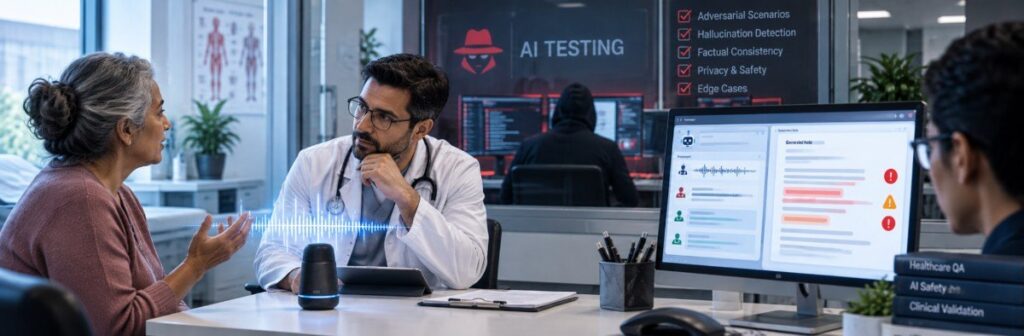
Implementing intelligent automation in clinical environments introduces complex risks that standard testing often misses. AI red teaming in healthcare bridges this gap by stress-testing diagnostic models against adversarial inputs and algorithmic bias. Explore how proactive threat simulation helps health tech teams build resilient, ethical, and dependable systems for modern medical practices and patient care.
AI Medical Scribe Benchmarking

Evaluating healthcare automation tools can feel overwhelming without a standardized approach. Join us as we examine best practices for AI medical scribe benchmarking, comparing error rates, time savings, and physician satisfaction scores. Get the insights you need to make a confident technology investment for your medical team.
AI Bias Testing in Healthcare

AI Bias Testing in Healthcare is essential for evaluating whether artificial intelligence systems produce consistent and equitable results across different patient groups. By testing clinical data, model outputs, demographic variations, and potential disparities, healthcare organizations can identify bias and improve the safety, fairness, and reliability of AI-driven healthcare applications.