




Latest Insights
How Artificial Intelligence Is Transforming the Medical Field: From Diagnosis to Patient Care
- Oct 30, 2026
- Sajid M.
- Artificial intelligence in medical field
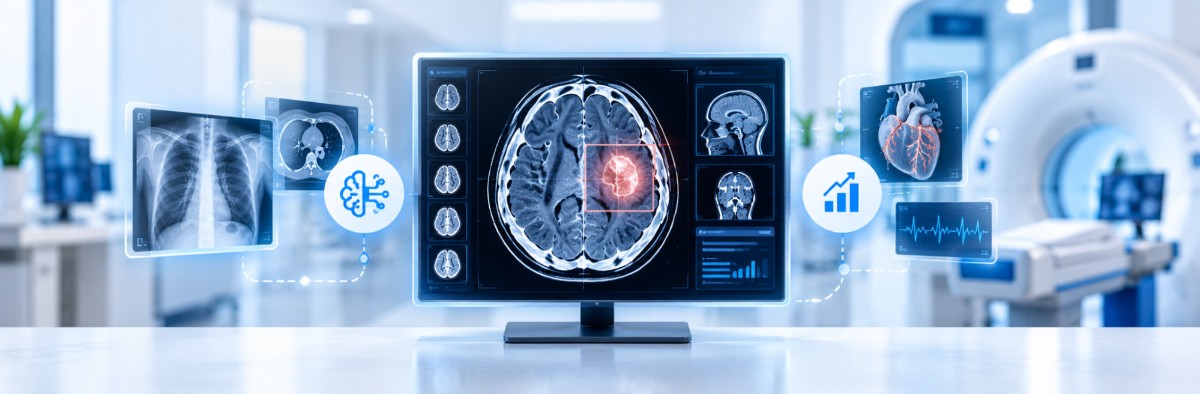
AI is no longer waiting outside the hospital doors it is already in the room. It can help spot abnormalities in medical scans, uncover patterns in patient data, support clinical decisions, and take repetitive tasks off healthcare teams’ plates.
But smarter healthcare also means higher expectations for the technology behind it. When digital systems influence patient experiences and clinical workflows, reliability matters. That is where rigorous software testing and QA, including the work we do at Testiva, becomes an important part of building technology people can trust.
Across the world, AI is pushing medicine toward a future that is faster, more personalized, and increasingly data-driven. The exciting part is not AI replacing doctors—it is seeing what doctors, researchers, and healthcare teams can achieve when intelligent technology works reliably alongside them.
AI Is Changing How Diseases Are Diagnosed
Diagnosis is one of the most promising applications of artificial intelligence in medicine. Modern machine-learning systems can analyze complex datasets and identify patterns that may be difficult or time-consuming for humans to detect manually.
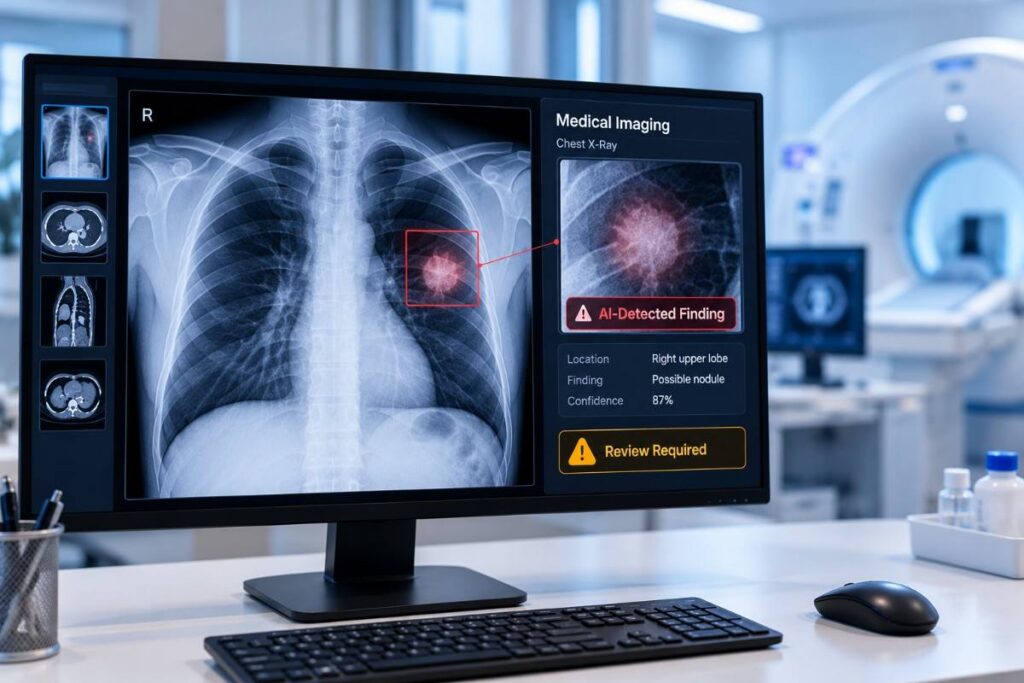
Medical imaging is a prominent example. AI-powered systems can assist clinicians in examining X-rays, CT scans, MRIs, mammograms, retinal images, and other diagnostic images. Computer vision models can highlight suspicious regions, prioritize potentially urgent cases, and provide additional information for radiologists to consider.
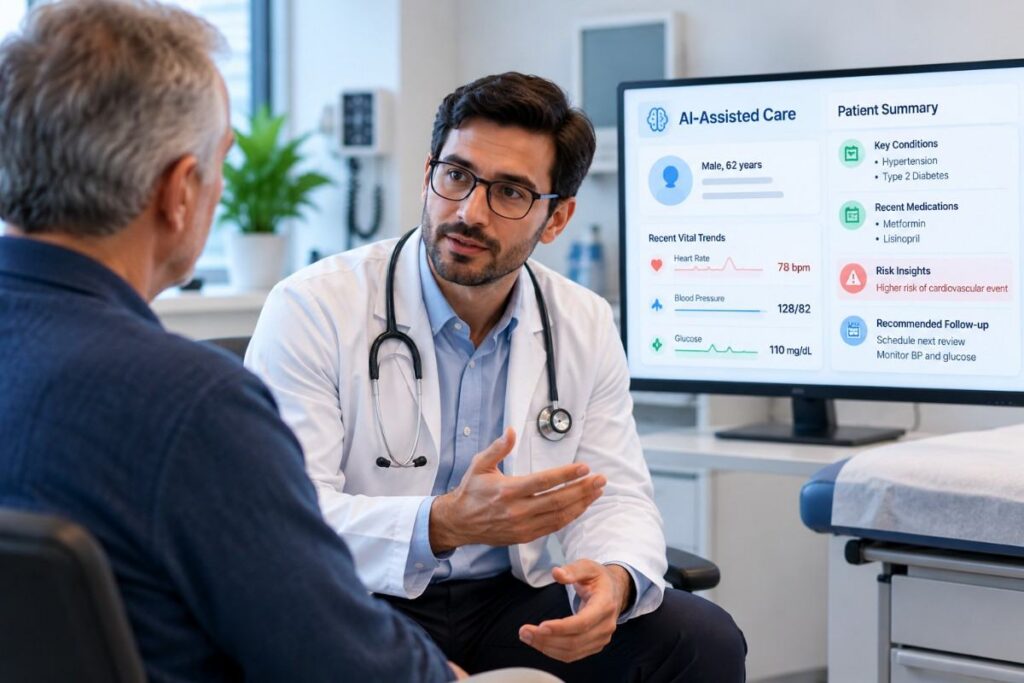
The objective is not simply to make machines “better doctors.” A more practical model is AI-assisted diagnosis, where software functions as another analytical layer within a clinician’s workflow. A radiologist, for example, remains responsible for interpreting the broader clinical picture while AI can help identify abnormalities deserving closer attention.
AI is also expanding beyond imaging. Machine-learning models can process laboratory results, medical histories, symptoms, genomic information, and other clinical data. As these capabilities mature, healthcare providers may become better equipped to identify risks earlier and intervene before conditions become significantly more difficult to manage.
Predictive Analytics Could Move Healthcare Toward Prevention
Traditional healthcare often responds after a patient becomes ill. AI creates opportunities for a more predictive approach.
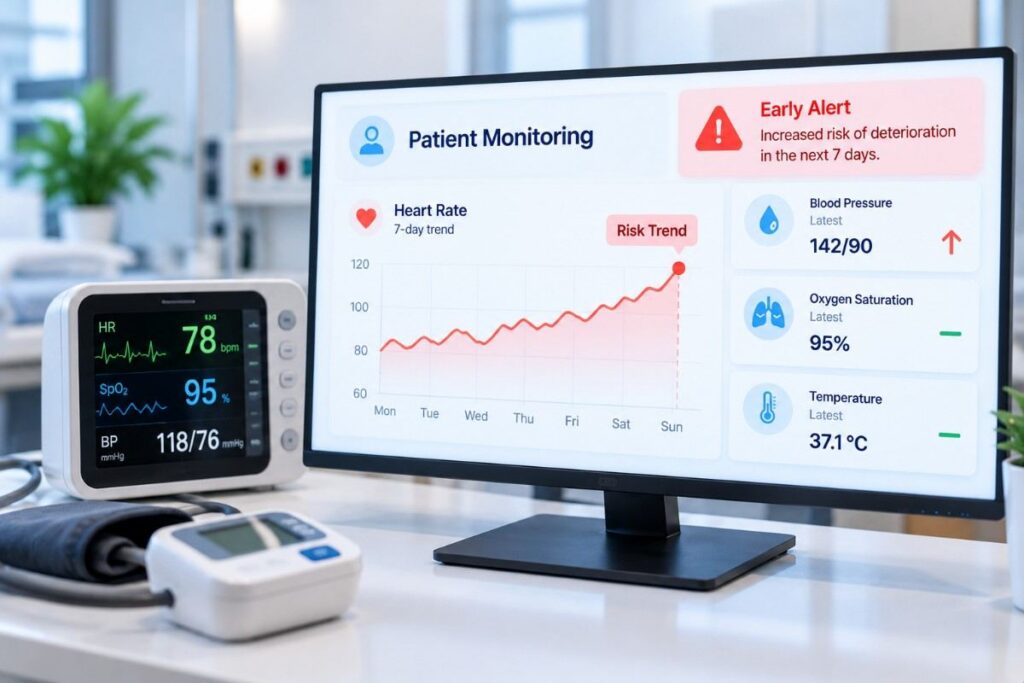
Predictive models can analyze historical and real-time information to estimate the likelihood of specific outcomes. Depending on the system and available data, healthcare organizations can use these models to support assessments involving deterioration, hospital readmission, disease progression, or other clinical risks.
That capability matters because timing can dramatically affect healthcare outcomes. If clinicians receive meaningful warnings earlier, they may have more opportunities to investigate and intervene.
There is an important technical caveat, though: predictions are only as dependable as the models, datasets, validation processes, and clinical contexts behind them. An algorithm performing well in one population or hospital may behave differently elsewhere. Healthcare AI therefore requires rigorous validation across diverse patient populations rather than assuming that successful laboratory performance automatically translates into reliable real-world medicine.
Personalized Medicine Is Becoming More Practical
For decades, healthcare has largely relied on treatments developed around population-level evidence. Although this approach remains fundamental to medicine, individuals can respond differently to the same treatment because of genetics, medical history, lifestyle, environment, and numerous other factors.
Artificial intelligence can help clinicians navigate this complexity. By analyzing large combinations of patient information, AI systems can potentially identify patterns associated with treatment responses and help healthcare professionals evaluate more personalized strategies.
This is particularly relevant to fields such as oncology and genomics, where treatment decisions can involve extensive molecular and clinical information. AI can assist researchers and clinicians in finding relationships within datasets that would otherwise be extraordinarily difficult to examine manually.
Personalized medicine does not mean allowing an algorithm to prescribe treatment independently. It means giving qualified professionals better tools for understanding the individual patient in front of them. That distinction is essential because clinical context, patient preferences, professional judgment, and ethical considerations cannot simply be reduced to a prediction score.
AI Is Reshaping Everyday Patient Care
Some of AI’s biggest effects may occur outside dramatic diagnostic breakthroughs. Healthcare involves an enormous amount of routine communication, documentation, scheduling, monitoring, and administration. AI can reduce friction throughout these everyday processes.
Conversational systems, for instance, can help patients navigate basic questions, appointment processes, instructions, and healthcare services. Natural-language technologies can also assist clinicians with documentation and extracting useful information from lengthy records.
Remote patient monitoring creates another opportunity. Connected devices can collect information outside traditional clinical settings, while intelligent software can help detect patterns that deserve professional attention. This could be particularly valuable for chronic disease management and patients who require continuous observation without remaining in a hospital.
Used appropriately, these technologies can give medical professionals more time for work requiring human expertise. The real efficiency win is not removing people from healthcare; it is removing unnecessary digital busywork from their day.
Drug Discovery Is Getting an AI-Powered Upgrade
Developing new medicines is expensive, complex, and scientifically demanding. Researchers must explore enormous chemical and biological spaces before promising candidates ever reach clinical trials.
AI can help accelerate parts of this process by analyzing molecular structures, biological data, scientific literature, and experimental results. Machine-learning systems can support researchers in identifying potential drug targets, predicting molecular properties, and prioritizing compounds for further investigation.
Generative AI is adding another layer to this field by helping researchers explore possible molecular structures and biological interactions computationally. These technologies do not eliminate laboratory experimentation or clinical trials, but they can make early-stage exploration more targeted.
For pharmaceutical and biotechnology organizations, even incremental improvements in research efficiency can matter. The broader transformation is therefore less about an algorithm magically inventing medicine and more about creating smarter tools across an extraordinarily complicated scientific pipeline.
Generative AI Is Entering the Clinical Workflow
Generative AI has brought medical artificial intelligence into a new phase. Unlike specialized predictive models designed for narrowly defined tasks, large language models can interact with unstructured information such as clinical notes, medical literature, patient communications, and administrative documents.
Potential applications include summarizing patient histories, preparing draft documentation, organizing information, supporting medical research, and making complex healthcare information easier to navigate. This could reduce administrative burdens that consume significant amounts of clinicians’ time.
Yet generative AI introduces a familiar geeky problem with very serious consequences: software can sound convincing while being wrong. Models can generate inaccurate information, omit context, or behave unpredictably when given unusual inputs.
Consequently, healthcare organizations need strong human oversight, clearly defined use cases, systematic testing, monitoring, and safeguards. Fluency should never be confused with clinical accuracy.
Healthcare AI Has a Quality Assurance Problem to Solve
The excitement surrounding AI sometimes overshadows a fundamental engineering reality: an intelligent feature is still part of a software system.
Healthcare applications must work across complicated environments involving APIs, databases, cloud platforms, medical devices, patient portals, hospital systems, and third-party integrations. A sophisticated AI model becomes considerably less useful if an integration fails, an interface confuses users, performance deteriorates under load, or an update unexpectedly breaks a critical workflow.
Testing AI-powered healthcare software also differs from testing deterministic applications. Traditional software usually produces predictable outputs from predefined inputs. AI systems can be probabilistic, meaning teams must evaluate not only whether features technically work but also how models behave across edge cases, different datasets, unusual prompts, and changing conditions.
Functional testing, integration testing, performance testing, usability testing, security assessment, regression testing, and continuous monitoring therefore become essential components of responsible AI deployment. In healthcare, “it worked during the demo” is nowhere near a sufficient quality standard.
Privacy, Bias, Security, and Trust Cannot Be Afterthoughts
Healthcare data is among the most sensitive information organizations manage. AI systems may depend on extensive patient information, making privacy, security, governance, and regulatory compliance central design requirements.
Bias presents another significant challenge. If training data inadequately represents certain populations, AI performance may vary across demographic groups or clinical settings. Developers and healthcare organizations must actively evaluate systems for these differences rather than treating fairness as an assumption.
Transparency also matters. Clinicians need to understand the appropriate role and limitations of AI recommendations, while patients deserve clarity about how technology affects their care. Systems should support informed professional judgment instead of creating unquestioned dependence on automated outputs.
Trust will ultimately determine how successfully AI integrates into medicine. Building that trust requires evidence, responsible governance, rigorous testing, security, transparency, and continuous evaluation after deployment.
The Future Is Human Expertise Amplified by AI
The most realistic future of healthcare is neither completely automated hospitals nor clinicians ignoring artificial intelligence. It is a collaborative model in which machines handle computational complexity while people provide judgment, empathy, accountability, and clinical expertise.
AI can analyze millions of data points, but healthcare remains deeply human. Patients need explanations, reassurance, ethical decision-making, and professionals who understand circumstances that may never fit neatly into a dataset.
For healthcare organizations and technology companies, the challenge is therefore shifting from simply asking, “Can we add AI?” to asking, “Can we deploy AI safely, reliably, and meaningfully?” That requires multidisciplinary collaboration between clinicians, engineers, data scientists, security specialists, regulators, product teams, and QA professionals.
Artificial intelligence is already transforming medicine from diagnosis and research to operations and patient care. The organizations that create the greatest value will be those that combine innovation with rigorous quality standards. At Testiva, we believe advanced technology reaches its potential when users can depend on it. As healthcare becomes increasingly intelligent, testing, validation, and thoughtful implementation will remain essential to turning impressive algorithms into genuinely better experiences and outcomes.
Ready to build reliable digital experiences around the next generation of healthcare technology? Start your QA journey today and unlock flawless delivery.