




Latest Insights
How to Test AI Patient Intake Automation Systems
- Aug 26, 2026
- Sajid M.
- AI Patient Intake Automation

Artificial intelligence is transforming healthcare administration, and patient intake is one of the first areas experiencing rapid innovation. AI-powered patient intake automation systems can collect patient information, verify insurance, schedule appointments, identify missing documentation, and even answer routine questions before a patient ever walks into a clinic. The result is faster registration, reduced administrative burden, and a better patient experience.
However, implementing AI into patient intake introduces a completely new layer of quality assurance challenges. Unlike traditional software, AI systems must not only function correctly but also make reliable, explainable, and consistent decisions across thousands of different patient scenarios. A system that incorrectly classifies insurance information, misunderstands patient symptoms, or mishandles protected health information can create operational inefficiencies, compliance risks, and patient dissatisfaction.
At Testiva, we’ve seen firsthand that successful AI implementations require a different testing mindset than conventional applications. Our AI testing and quality assurance services help healthcare technology companies validate not just functionality, but also the intelligence, reliability, security, and trustworthiness of AI-driven systems before they reach production.
Why AI Patient Intake Systems Require Specialized Testing
Traditional software generally behaves predictably. Given the same input, it produces the same output every time. AI systems, particularly those powered by large language models (LLMs) or machine learning algorithms, introduce probabilistic behavior. They interpret natural language, make predictions, and adapt to complex inputs that may vary significantly between users.
This fundamentally changes the testing approach.
Instead of simply verifying whether a form submits successfully, QA teams must determine whether the AI correctly interpreted what the patient intended. Did it recognize that “I’ve been feeling pressure in my chest” should trigger additional screening questions? Did it accurately distinguish between similar insurance providers? Did it avoid making unsupported medical recommendations?
Testing AI patient intake systems therefore extends beyond functional verification into evaluating intelligence, accuracy, safety, and resilience.
Healthcare organizations cannot afford assumptions when patient information, regulatory compliance, and clinical workflows are involved.
Understanding the Components That Need Testing
An AI patient intake platform often consists of several interconnected components working together.
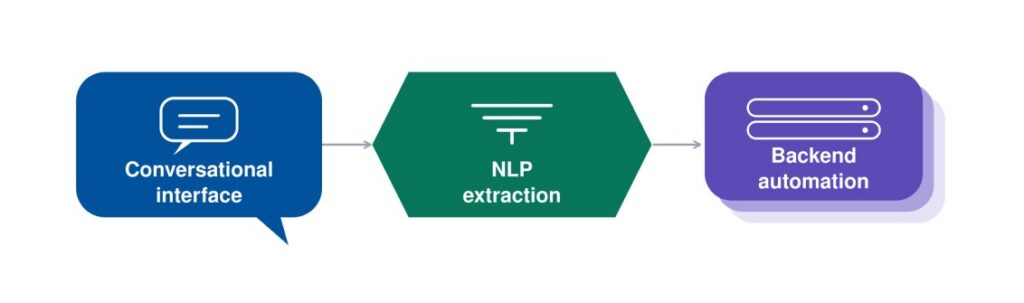
The conversational interface communicates with patients through chat or voice interactions. Natural language processing extracts relevant medical and demographic information. Backend automation validates insurance, updates electronic health records, schedules appointments, and routes cases to the appropriate departments.
Each component introduces its own testing requirements.
A chatbot may appear conversational while silently misclassifying symptoms. Insurance verification may work perfectly for common providers but fail for regional carriers. Appointment scheduling logic might perform well during normal conditions yet struggle when multiple specialists have overlapping availability.
Quality assurance must evaluate every integration point alongside the AI itself.
Functional Testing Still Forms the Foundation
Despite the sophistication of AI, traditional functional testing remains essential.
Patient registration should correctly capture required information. Mandatory fields should validate appropriately. Uploaded identification documents should process successfully. Insurance verification workflows should execute without interruption. Appointment confirmations should reach patients through the correct communication channels.
These foundational tests ensure that conventional software functionality remains stable regardless of AI capabilities.
Every workflow should be tested using realistic patient journeys rather than isolated features. A patient registering for an annual physical follows a different path than someone scheduling urgent care or a specialist referral. Testing these complete workflows uncovers integration defects that isolated feature testing often misses.
Regression testing is equally important because AI model updates may unintentionally affect downstream workflows.
Evaluating AI Accuracy
Accuracy testing is where AI quality assurance becomes significantly more complex.
Unlike deterministic systems, AI responses require evaluation against expected intent rather than exact wording.
For example, patients may describe the same medical issue in dozens of different ways.
“I’ve had stomach pain.”
“My abdomen hurts.”
“My belly has been cramping.”
“I’ve been having digestive discomfort.”
An effective AI intake system should consistently recognize these as related symptoms while collecting appropriate follow-up information.
Testing should include thousands of language variations representing different age groups, literacy levels, cultural backgrounds, regional expressions, and communication styles.
The objective is not merely to determine whether the AI responds, but whether it responds correctly, consistently, and safely.
High-quality datasets representing real-world patient conversations become invaluable during this stage of testing.
Testing Edge Cases and Unpredictable User Behavior
Patients rarely behave exactly as software designers expect.
Some provide incomplete answers.
Others include multiple unrelated issues within a single message.
Some use slang, abbreviations, emojis, or voice transcription errors.
Others accidentally enter information into the wrong fields.
AI systems must gracefully handle these situations without producing confusing or potentially dangerous outcomes.
QA teams should intentionally introduce malformed inputs, contradictory information, misspellings, incomplete records, duplicate submissions, and ambiguous statements.
For example, a patient might write:
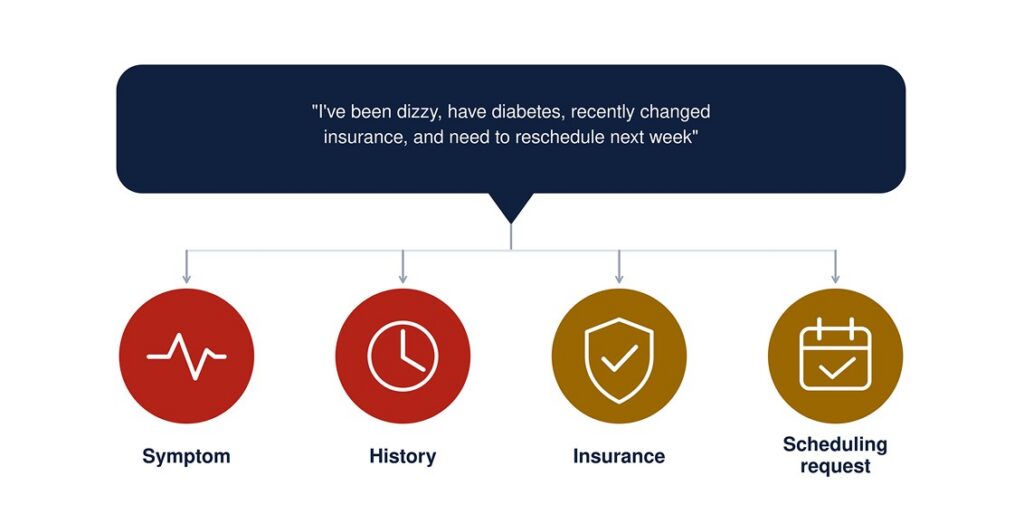
“I’ve been dizzy, have diabetes, recently changed insurance, and need to reschedule next week’s appointment.”
The AI should successfully separate these requests rather than overlooking critical medical information.
Robust edge-case testing reveals weaknesses long before patients encounter them.
Security and HIPAA Compliance Testing
Healthcare software carries exceptionally high security expectations.
Patient intake systems routinely process protected health information (PHI), making security testing a non-negotiable requirement.
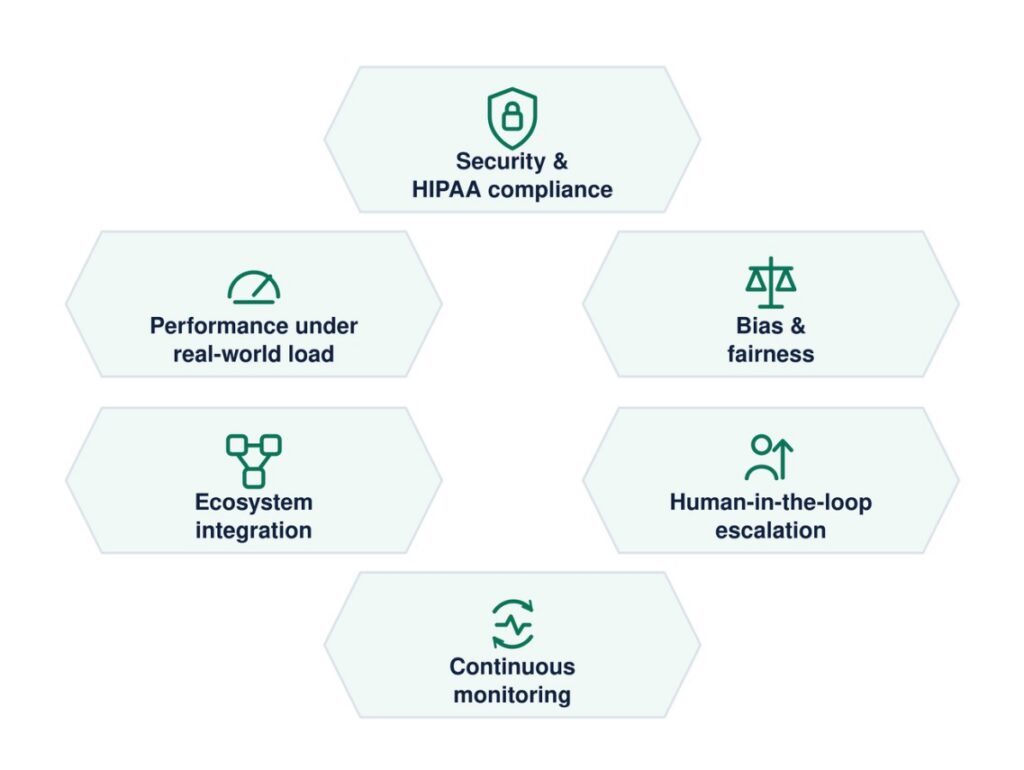
QA should verify encryption during transmission and storage, role-based access controls, secure authentication, audit logging, session management, and secure API integrations.
Beyond traditional security, AI introduces additional concerns.
Prompt injection attacks may attempt to manipulate chatbot behavior. Sensitive information could accidentally appear in generated responses. Poorly configured models may expose confidential data through unintended interactions.
Testing should simulate malicious prompts, unauthorized access attempts, and adversarial inputs to ensure the AI consistently protects patient information.
Compliance validation should include HIPAA requirements alongside applicable regional privacy regulations.
Performance Testing Under Real-World Conditions
Healthcare providers often experience predictable traffic spikes.
Monday mornings, seasonal illnesses, open enrollment periods, and public health events can dramatically increase patient registrations.
AI-powered systems must maintain responsiveness under these conditions.
Performance testing should evaluate response times, concurrent users, API latency, database performance, AI inference speed, and infrastructure scalability.
Patients quickly lose confidence when conversational interfaces become slow or unresponsive.
Load testing should also evaluate downstream integrations such as electronic health record systems, insurance verification services, payment gateways, and scheduling platforms.
One bottleneck within the ecosystem can negatively affect the entire patient intake experience.
Bias and Fairness Testing
AI systems learn from data, which means they may unintentionally inherit biases present in historical datasets.
Healthcare applications require particular attention because biased decisions can directly affect patient care and accessibility.
Testing should examine whether responses remain consistent across different demographic groups, languages, accents, disabilities, and socioeconomic backgrounds.
For example, does the AI interpret symptoms differently depending on writing style?
Does it provide equal assistance to patients with limited English proficiency?
Can users with accessibility needs successfully complete the intake process?
Fairness testing helps identify disparities before deployment while supporting ethical AI practices that improve healthcare accessibility for everyone.
Integration Testing Across Healthcare Ecosystems
Patient intake systems rarely operate independently.
Most connect with electronic health records, billing platforms, laboratory systems, pharmacy databases, insurance providers, identity verification services, payment processors, and communication platforms.
Every integration represents another opportunity for failure.
Information captured by the AI should map correctly into downstream systems without corruption, duplication, or formatting inconsistencies.
Testing should verify data synchronization, API reliability, retry mechanisms, timeout handling, and recovery after temporary service outages.
End-to-end validation ensures patient information flows seamlessly throughout the healthcare ecosystem.
Human-in-the-Loop Validation
AI should assist healthcare professionals, not replace critical human judgment.
Well-designed intake systems recognize uncertainty and appropriately escalate conversations when confidence falls below acceptable thresholds.
Testing should verify these escalation mechanisms thoroughly.
If the AI cannot confidently interpret symptoms or encounters potentially serious medical conditions, it should transfer the conversation to qualified staff rather than generating speculative responses.
Quality assurance should evaluate confidence scoring, escalation triggers, notification workflows, and the user experience during human handoffs.
Patients should never feel abandoned or trapped in an automated conversation when human assistance is needed.
Monitoring After Deployment
Testing should not end once the application reaches production.
AI systems evolve over time as usage patterns change, new medical terminology emerges, and software updates are introduced.
Continuous monitoring helps identify declining accuracy, unexpected behavior, model drift, increased failure rates, and emerging security concerns before they affect patient care.
Production monitoring should include automated quality metrics, anomaly detection, conversation reviews, user feedback analysis, and periodic regression testing using updated datasets.
This continuous validation strategy allows organizations to maintain confidence in their AI systems as they scale.
Best Practices for Testing AI Patient Intake Automation Systems
Organizations adopting AI in healthcare benefit from establishing comprehensive QA strategies early in development rather than treating testing as a final project phase.
Successful testing programs combine traditional software testing, AI evaluation, security validation, compliance verification, usability assessments, and continuous monitoring into a unified quality framework.
Cross-functional collaboration between QA engineers, AI specialists, healthcare professionals, compliance experts, and product teams also improves testing effectiveness. Medical expertise is particularly valuable when validating symptom interpretation, workflow accuracy, and patient communication.
Finally, realistic testing environments are essential. Synthetic test cases provide coverage, but representative patient scenarios expose practical issues that scripted tests often overlook. The closer test data reflects actual patient behavior, the more reliable the AI system becomes after deployment.
Final Thoughts
AI patient intake automation has enormous potential to streamline administrative workflows, improve patient satisfaction, and reduce operational costs across healthcare organizations. Yet these benefits depend entirely on the reliability of the underlying technology.
Testing AI patient intake systems requires much more than verifying buttons, forms, and APIs. It demands careful evaluation of conversational accuracy, decision quality, security, compliance, integrations, performance, fairness, and long-term reliability. A comprehensive QA strategy helps healthcare organizations deploy AI with confidence while minimizing risks that could impact patients or providers.
At Testiva, we believe quality assurance should evolve alongside artificial intelligence. As AI becomes an increasingly critical component of modern healthcare software, organizations that invest in thorough, specialized testing will be best positioned to deliver safe, trustworthy, and seamless patient experiences. Unlock flawless delivery with AI systems that are not only innovative but also rigorously tested from every angle.